Seeing Is No Longer Believing: A Practical Guide to Detecting AI-Generated Video and Audio
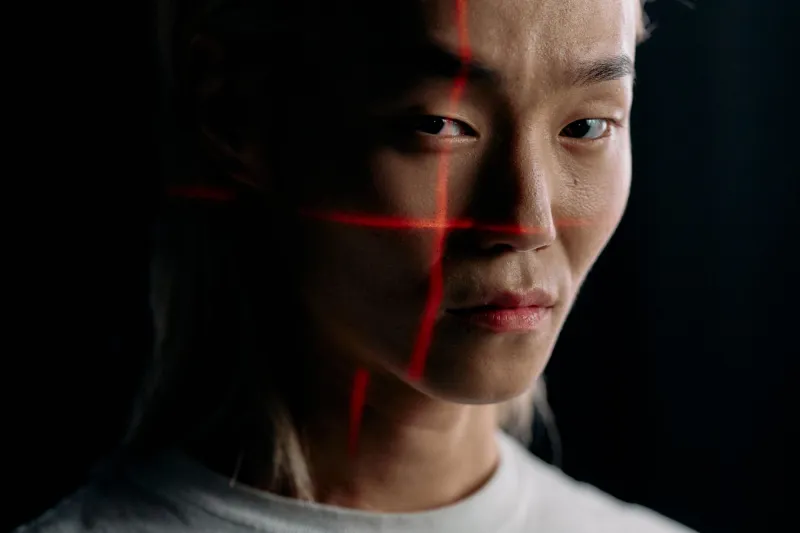
Not long ago, producing a convincing fake video of a public figure required a Hollywood budget and a team of visual-effects artists. Today, a free browser-based tool and a few minutes of source footage can generate something disturbingly plausible. The democratization of deepfake technology has outpaced both public awareness and the regulatory frameworks meant to contain it — and that gap is costing real people real money, real reputations, and in some cases, real safety.
The term "deepfake" derives from the combination of deep learning and fake media. At its core, the technology uses neural networks — specifically generative adversarial networks, or GANs — to synthesize new imagery by studying thousands of reference frames. The result is a video or audio clip that may look and sound authentic even to trained observers under casual viewing conditions. What was once a novelty confined to academic research labs has migrated onto consumer platforms, Discord servers, and smartphone apps available in the Apple App Store and Google Play.
Why the Stakes Have Never Been Higher
The FBI has issued multiple public-service announcements warning Americans about the use of deepfake technology in sextortion schemes, business email compromise, and political influence operations. In 2024, a finance employee at a multinational firm wired more than $25 million after attending a video call populated almost entirely by AI-generated likenesses of colleagues — a case that demonstrated the technology's potential to bypass even face-to-face verification.
Beyond financial fraud, manipulated media is weaponized to suppress voter turnout, defame private citizens, and manufacture false evidence in legal disputes. The harm extends well beyond embarrassment. Once a deepfake circulates on social media, corrections rarely travel as far or as fast as the original falsehood.
Red Flags Visible to the Naked Eye
Despite their sophistication, most deepfakes still carry detectable artifacts — at least for now. Training yourself to notice these anomalies before you share content is one of the most effective defenses available.
Facial boundary inconsistencies. Look carefully at the edges of the face, particularly where it meets the hairline, ears, and neck. AI compositing frequently produces a subtle blurring, halo effect, or mismatched skin tone at these junctions.
Unnatural blinking patterns. Early deepfake models struggled to replicate human blinking at a realistic rate. Even newer systems occasionally produce eyes that blink too infrequently, too mechanically, or asymmetrically.
Lighting and shadow mismatches. A face that appears well-lit while the surrounding environment is dark — or vice versa — suggests the face was generated or inserted separately from the background footage.
Mouth and lip synchronization errors. Audio deepfakes layered over existing video frequently misalign consonants and vowel shapes. Watch the speaker's lips during fast speech or unusual phonemes.
Temporal inconsistencies. Pay attention to frames where the subject turns their head or moves quickly. AI models often lose coherence during rapid motion, producing brief distortions or unnatural texture smearing.
Audio artifacts. Synthesized voices frequently lack the micro-variations inherent in human speech — the slight breathiness between sentences, the natural imperfection of sibilant sounds, the subtle reverb of a real acoustic environment. Overly smooth, studio-clean audio in an ostensibly casual setting is a warning sign.
Verification Tools You Can Use Today
Manual inspection has limits. For content that carries significant implications — a political statement attributed to an elected official, a video purportedly showing criminal behavior, a voice message requesting a financial transaction — dedicated verification tools offer a more rigorous assessment.
Hive Moderation (hivemoderation.com) provides a free AI-generated content detector that accepts uploaded images and video clips, returning a confidence score for synthetic origin. It is not infallible, but it offers a useful second opinion.
Microsoft's Video Authenticator was developed specifically to analyze media for blending artifacts introduced during deepfake synthesis. Though primarily distributed to news organizations and political campaigns, its underlying methodology has informed several open-source derivatives.
FotoForensics (fotoforensics.com) applies error-level analysis to images, surfacing regions that have been digitally altered. While designed primarily for still images, it can be applied to video stills extracted from suspicious footage.
InVID/WeVerify is a browser extension widely used by professional fact-checkers and journalists. It breaks video into keyframes and enables reverse image searches across multiple databases simultaneously, helping establish whether footage has been repurposed from an unrelated event.
Sensity AI and Reality Defender offer enterprise-grade detection APIs, but both provide limited free tiers accessible to individual researchers.
No single tool provides a definitive verdict. Cross-referencing multiple services and combining technological analysis with contextual journalism — asking who published the content, when, and with what apparent motive — remains the gold standard.
The Responsible Sharing Standard
Verification is only half the equation. Equally important is adopting a disciplined standard for what you amplify.
Apply the same skepticism to emotionally provocative content that you would to an unsolicited financial offer. Deepfakes are frequently engineered to trigger outrage, fear, or sympathy because those emotional states suppress critical evaluation. If a video makes you want to share it immediately, that urgency itself is a reason to pause.
Check the original source before forwarding. A clip posted by an account created two weeks ago, with no prior posting history and no verifiable affiliation to the event depicted, warrants significant suspicion regardless of how authentic it appears.
When in doubt, defer to established fact-checking organizations. Snopes, PolitiFact, and the Associated Press's fact-check desk regularly address viral manipulated media. Reuters and the Washington Post maintain dedicated verification desks. These organizations have access to forensic tools and journalistic resources beyond what most individuals can replicate.
Finally, consider the downstream consequences before sharing unverified content involving private individuals. A fabricated video can destroy a person's professional reputation, endanger their physical safety, or be used as leverage in harassment campaigns — and the original sharer bears some moral responsibility for that amplification.
Looking Ahead
The detection arms race between deepfake generators and deepfake detectors will only intensify. Researchers at MIT, Carnegie Mellon, and several DARPA-funded programs are developing watermarking standards that would embed cryptographic provenance data directly into media at the point of creation — a framework sometimes called C2PA, or the Coalition for Content Provenance and Authenticity. Major camera manufacturers and social platforms have begun piloting C2PA integration, though widespread adoption remains years away.
Until those standards are universal, the most reliable safeguard is a skeptical, methodical viewer. In an information environment where synthetic media is increasingly indistinguishable from authentic footage, the burden of verification has shifted — at least partially — onto every person who encounters a compelling clip and considers pressing share.