The Body as Password: Why Biometric Authentication Carries Risks That Stolen Credentials Never Could
The pitch for biometric authentication is intuitive and, on its surface, compelling. You cannot forget your fingerprint. You cannot accidentally share your face with a phishing site. Your iris does not appear in a credential-stuffing database. These properties make biometrics feel like an obvious upgrade over the password — a category of authentication that has been failing users and organizations for decades.
But the convenience calculus obscures a structural risk that security professionals have been raising for years, and that is now materializing in documented attacks and legislative gaps across the United States: biometric identifiers are permanent. When a password is compromised, you change it. When a fingerprint is compromised, you cannot grow a new one.
What Biometric Authentication Actually Protects — and What It Doesn't
To evaluate the risks of biometric authentication, it helps to understand what is actually happening when a device scans your face or finger. In most consumer implementations — the Face ID on an iPhone, the fingerprint reader on an Android device, the Windows Hello camera on a laptop — the biometric data is processed locally and converted into a mathematical template. That template is stored in a protected hardware enclave on the device itself. The raw biometric is, in theory, never transmitted or stored on a remote server.
This architecture is genuinely more secure than many users assume. A breach of the service you authenticate to does not, in this model, expose your biometric data. The template on your device is not sent to the company's servers. This is a meaningful protection.
However, this is not the only way biometrics are deployed. Employers, financial institutions, government agencies, and a growing number of commercial services collect and store biometric data centrally — on servers they control, in databases that can be breached. The Illinois Biometric Information Privacy Act has generated thousands of lawsuits against companies that collected facial or fingerprint data without proper consent or retention policies, which itself signals how widespread centralized biometric collection has become. Other states have followed with their own frameworks, though federal legislation remains absent.
When those centralized databases are compromised — and they have been, repeatedly — the consequences are categorically different from a password breach. You can issue everyone a new password. You cannot issue anyone a new face.
Spoofing: The Attack That Bypasses the Sensor
Beyond the data-storage question lies the attack surface of the sensor itself. Biometric systems do not read your actual fingerprint or face — they read a representation of it, captured by hardware that can be deceived.
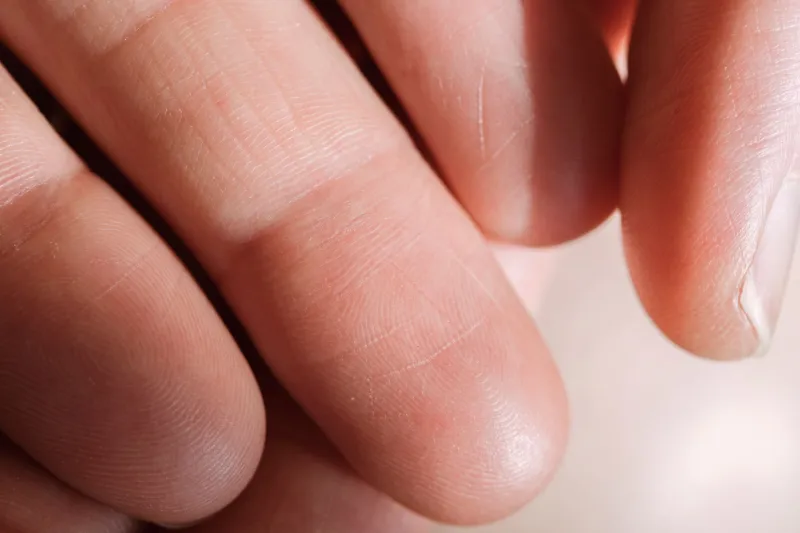
Fingerprint spoofing using materials as accessible as gelatin, silicone, or even high-resolution printed photographs has been demonstrated by academic researchers and security professionals for over two decades. Modern capacitive and ultrasonic sensors have raised the bar considerably, but they have not eliminated the vulnerability. In 2019, researchers at Cisco Talos demonstrated a process for creating artificial fingerprints capable of fooling multiple commercial smartphone sensors with a success rate that, while imperfect, was high enough to represent a practical threat against targeted individuals.
Facial recognition systems have faced similar scrutiny. Two-dimensional face unlock systems — common on lower-cost Android devices — have historically been defeated using photographs. More sophisticated three-dimensional systems, such as Apple's Face ID, are substantially more resistant but not invulnerable. Researchers have demonstrated that with sufficient biometric data about a specific individual — the kind of data that might be assembled from social media profiles, leaked photographs, or data broker repositories — constructing a spoofing artifact becomes a feasible, if resource-intensive, undertaking.
Voice authentication, used by some financial institutions and call centers in the United States, faces a particularly acute version of this threat in the current environment. Generative AI tools capable of cloning a person's voice from a few seconds of audio have become widely available, and documented fraud cases involving synthetic voice authentication bypasses have already been reported by financial institutions.
The Legal Landscape and Its Limits
The legal protections surrounding biometric data in the United States are fragmented and, in most jurisdictions, limited. Illinois, Texas, Washington, and a handful of other states have enacted biometric privacy statutes that regulate how private entities collect, store, and share biometric identifiers. These laws vary considerably in their scope, enforcement mechanisms, and private right of action.
At the federal level, no comprehensive biometric privacy framework exists. This means that for most Americans, the protections governing what happens to their fingerprint template after a corporate breach are determined by whichever state they happen to live in — and in many states, those protections are minimal.
The asymmetry is significant. When a company suffers a password breach, the regulatory and legal framework — however imperfect — provides a relatively clear path: notification requirements, remediation obligations, potential liability. When a company suffers a biometric breach, the path is murkier, the harm is harder to quantify, and the victim has no practical recourse for the fundamental injury: the permanent compromise of an identifier they cannot replace.
Rethinking the Convenience Trade-Off
None of this is an argument against biometric authentication categorically. For many use cases — local device unlock, where the template never leaves the hardware — biometrics offer a genuine security improvement over weak PINs or no authentication at all. The threat model is manageable, the convenience is real, and the architecture largely protects against the most serious risks.
The caution applies most acutely to contexts where biometric data is collected and stored externally: employer timekeeping systems, retail loyalty programs, financial services platforms, government benefit programs, and any other application where your biometric identifier lives on someone else's server. In those contexts, users should ask pointed questions before enrolling. Where is the data stored? How long is it retained? What happens in the event of a breach? Is there a non-biometric alternative?
Security professionals generally recommend treating biometrics as one factor in a multi-factor authentication framework rather than a standalone replacement for passwords. A system that requires both a biometric and a device-bound credential provides the convenience of biometric verification while limiting the consequences of any single factor's compromise.
The fingerprint is a remarkably intimate credential. It is worth understanding exactly what you are handing over — and to whom — before you press it to the glass.