When the Voice on the Phone Isn't Human: AI Impersonation and the New Social Engineering Threat
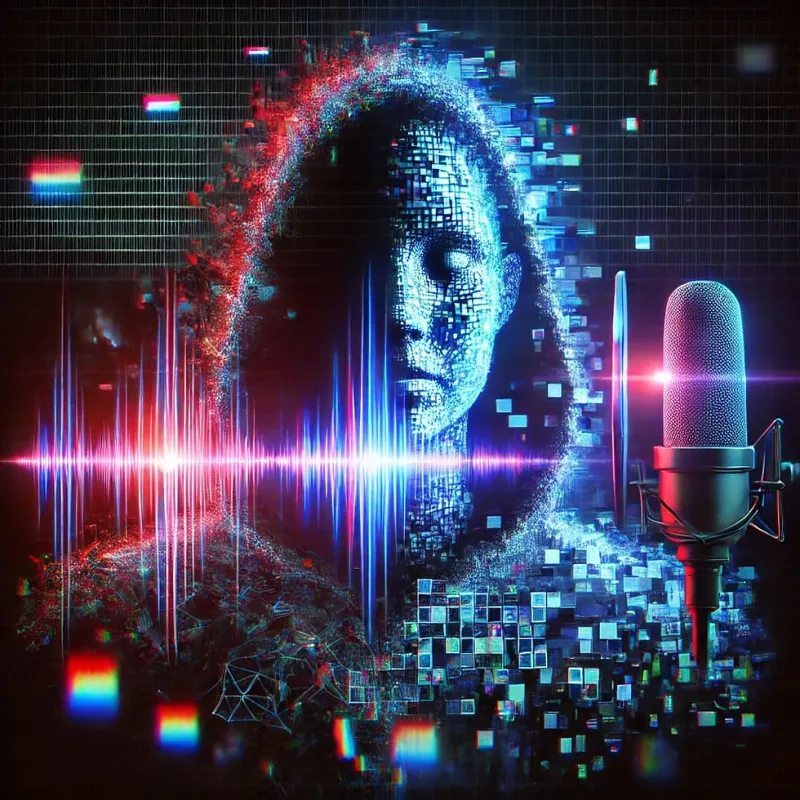
Photo: AI deepfake voice cloning technology digital identity fraud, via static.wixstatic.com
For decades, social engineering relied on human psychology — a persuasive caller, a convincing email, a well-timed sense of urgency. Those ingredients have not disappeared. They have simply been supercharged. Advances in generative artificial intelligence now allow malicious actors to clone a person's voice from as little as three seconds of publicly available audio, synthesize a realistic video likeness, and deploy both at scale. The result is a class of deception that bypasses the instincts most people have spent years developing.
The consequences are already being measured in dollars and reputational damage.
The Anatomy of an AI-Powered Impersonation Attack
Deepfake-assisted fraud typically follows a recognizable playbook, even if the technical components vary. An attacker begins with reconnaissance — harvesting audio from earnings calls, YouTube interviews, LinkedIn video posts, or corporate webinars. Modern voice-synthesis platforms can ingest that material and produce a convincing clone within minutes. The fabricated voice is then deployed via phone call, a pre-recorded voicemail, or even a live real-time audio stream fed through a spoofed number.
Video deepfakes follow a parallel process. Publicly available photographs and video footage are fed into diffusion-based synthesis models, generating a digital likeness capable of appearing in a live video call. While fully real-time video deepfakes remain technically demanding, they are no longer confined to nation-state actors. Commercially available tools have lowered the barrier considerably.
The attack surface is broader than most organizations appreciate. It encompasses not only executive impersonation but also vendor fraud, customer-service manipulation, and — with increasing frequency — the defeat of biometric identity-verification systems.
Real-World Incidents That Reframed the Threat
The case that drew widespread attention in the financial community involved a multinational firm's Hong Kong office in early 2024. A finance employee was invited to a video conference call that appeared to include the company's UK-based chief financial officer and several colleagues. Every participant on the call was, in fact, a deepfake. The employee was instructed to execute a series of wire transfers totaling approximately $25 million. He complied. By the time the fraud was discovered, the funds were unrecoverable.
That incident was not isolated. The FBI's Internet Crime Complaint Center has documented a steady rise in what it categorizes as business email compromise schemes augmented by synthetic audio. In several cases, employees received voicemails from what sounded unmistakably like their CEO, instructing urgent financial action outside normal approval channels. The voice was fabricated; the financial loss was real.
Beyond corporate finance, researchers have demonstrated that voice-cloning tools can defeat conversational authentication systems used by banks and government agencies — systems that ask a caller to repeat a passphrase and compare it against a stored voiceprint. When the voiceprint on file belongs to a real customer and the incoming audio is a cloned replica, those systems can fail.
Why Detection Is Harder Than It Sounds
Human perception is poorly calibrated for this threat. Studies in cognitive psychology consistently show that people assign high credibility to the voices of individuals they recognize, particularly authority figures. When a cloned voice carries the cadence, vocabulary, and emotional register of a known executive, the cognitive shortcuts that normally serve us well become liabilities.
Technical detection faces its own challenges. Deepfake-detection algorithms are engaged in a continuous arms race with generation models. As detection tools improve, so do the synthesis techniques designed to evade them. Artifacts that once reliably flagged synthetic media — unnatural blinking patterns, lighting inconsistencies at facial boundaries, audio compression anomalies — are becoming increasingly rare in outputs from current-generation models.
This does not mean detection is futile. It means that detection alone cannot be the primary line of defense.
Organizational Defense Strategies
Security professionals and enterprise risk teams have begun adapting their frameworks in response. Several principles have emerged as particularly effective.
Implement out-of-band verification for high-stakes requests. Any instruction to transfer funds, alter payment details, or grant elevated system access should require confirmation through a separate, pre-established communication channel — a direct callback to a number stored in the company directory, not a number provided in the original request. This single procedural control would have prevented many of the documented wire-transfer frauds.
Establish verbal code words for executive communications. Some organizations have adopted shared authentication phrases — known only to key personnel — that must be exchanged before sensitive instructions are acted upon. This mirrors practices long used in physical security and intelligence contexts.
Train employees on the existence and mechanics of the threat. Awareness programs that include audio and video demonstrations of deepfake technology tend to produce more durable vigilance than abstract policy statements. When employees have heard a cloned voice firsthand, they internalize the risk differently.
Scrutinize identity-verification workflows. Organizations relying on voice biometrics or video-based KYC (know your customer) processes should consult with their vendors about liveness-detection capabilities and adversarial testing against current synthesis tools.
Adopt a healthy skepticism toward urgency. Manufactured urgency is a hallmark of social engineering regardless of the medium. A policy requiring any request marked as time-sensitive to receive additional scrutiny — rather than less — runs counter to the attacker's intent.
Guidance for Individual Americans
The threat is not limited to corporate environments. Consumers are being targeted through family emergency scams in which a cloned voice purporting to belong to a grandchild or adult child calls to request emergency funds. The Federal Trade Commission has issued multiple warnings about this variant, sometimes called the "grandparent scam," now amplified by voice synthesis.
Individuals should consider establishing a family code word that can be requested whenever an unexpected emergency call arrives. They should also be skeptical of any caller who discourages verification, expresses extreme urgency, or requests payment via wire transfer, cryptocurrency, or gift card — regardless of how familiar the voice sounds.
Audio and video received through social media or messaging applications should be treated with particular caution. The provenance of digital media is increasingly difficult to establish through perception alone.
The Broader Trajectory
Generative AI is not going to become less capable. The synthesis tools available today will be surpassed by more sophisticated successors, and the cost of deploying them will continue to fall. What that means for defenders is that procedural and cultural controls — the human elements of security — matter more, not less, as the technical forgeries become more convincing.
The cipher, in this context, is not a password or an algorithm. It is the set of verified, out-of-band protocols that organizations and individuals establish before a crisis arrives. Those who build those protocols now will be considerably better positioned than those who wait for a $25 million lesson.