The Waiting Room Is Digital Now: A Privacy Checkup for the Health Apps on Your Phone
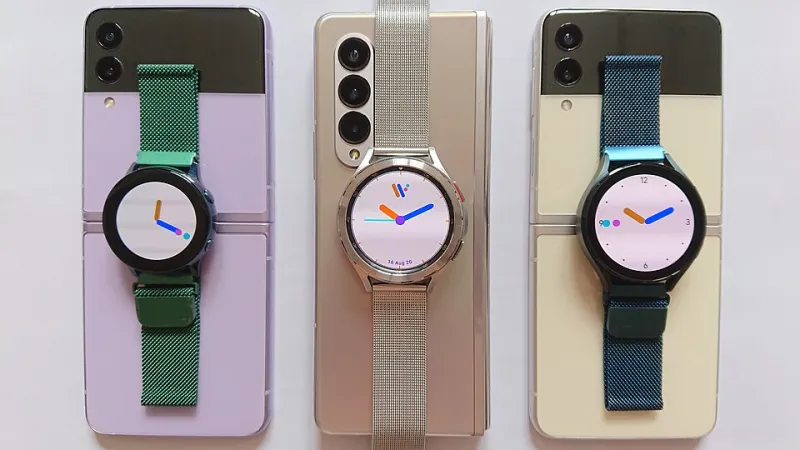
Photo: Ka Kit Pang, CC BY 3.0, via Wikimedia Commons
There is a reasonable assumption most people carry without examining it: that health information is special, and that the law treats it that way. In the clinical setting, that assumption holds reasonably well. On your phone, it often does not.
The Health Insurance Portability and Accountability Act governs covered entities — hospitals, clinics, insurers, clearinghouses — and the business associates who handle data on their behalf. If you download an app, create an account, and type in your symptoms, your cycle, your sleep, or your moods, you have not stepped into that system. You have stepped into a consumer software product with its own terms of service.
The line between the exam room and the app store
The line is drawn by who holds the data, not by how medical the data feels. A fertility tracker that predicts ovulation is generally not a covered entity and generally not bound by HIPAA’s privacy rule. The same is true of a wearable that estimates your blood oxygen, a journaling app that scores your anxiety, or a nutrition service that catalogs your medications.
Federal regulators have used other authorities. The Federal Trade Commission’s Health Breach Notification Rule reaches personal health record vendors that are not covered by HIPAA, and the agency has applied it in recent enforcement actions against fertility and prescription discount services. The FTC Act’s prohibition on deceptive practices has produced settlements with mental health platforms over advertising disclosures. Those cases matter, but they are reactive. They arrive after the data has moved.
State law is moving faster. Washington’s My Health My Data Act, which took effect in 2024, reaches consumer health data broadly defined and adds a private right of action. Nevada has enacted a comparable framework. Elsewhere, a resident of a state without such a statute is relying largely on a company’s own promises.
What counts as health data now
Far more than a diagnosis. Consider what an app can infer from signals you never think of as medical:
- Cycle and fertility logs, which can imply pregnancy, miscarriage, or a change in medical care.
- Mood and journaling entries, often processed by language models for sentiment analysis.
- Sleep and heart rate variability, which correlate with stress, illness, and alcohol use.
- Location traces, which reveal visits to clinics, pharmacies, and support groups.
- Purchase and search behavior, including prenatal vitamins, glucose monitors, or grief counseling.
- Contacts and calendar access, which can expose the people you see and when.
Combine a few of these and the result is not a data point. It is a portrait.
Where the information actually goes
The privacy label on an app store listing is self-reported and not independently audited. It is a useful starting point and a poor guarantee. Beneath the label sits a software supply chain: analytics kits, crash reporters, attribution tools, and advertising software development kits, each of which may receive a slice of what you enter. The advertising identifier on your device can link that slice to activity across unrelated apps.
Data brokers rarely buy health records directly. They assemble inferences from ordinary commercial signals and resell the result to insurers, marketers, employers, and, in some cases, law enforcement acting on legal process. That assembly happens outside any consent screen you have seen.
An audit you can complete in about an hour
- Inventory what you have. Open your phone’s app list and identify every health, fitness, sleep, fertility, and mood app. Include the ones bundled with a wearable.
- Separate clinical from consumer. If your provider gave you the app and it connects to your medical record, different rules apply. Confirm that in writing with the practice.
- Read the privacy label, then look for the word “sell.” Check whether the app’s definition of sale includes sharing for advertising or analytics, and whether you can opt out.
- Reset your advertising identifier. On iOS, disable app tracking requests system-wide. On Android, delete and reset the advertising ID. Do this after installing new health apps, not before.
- Revoke unnecessary permissions. A sleep tracker does not need contacts. A mood journal does not need precise location. Turn Bluetooth off when not pairing.
- Check the account-level sharing settings. Look for research programs, partner networks, and family or caregiver sharing that may have been enabled by default.
- Export, then delete. If you are leaving an app, request an export and then a deletion, and keep the confirmation. Deactivation is not deletion.
- Prefer on-device processing. Where an app offers local-only storage or integration with Apple Health or Health Connect, use it. Data that never leaves the handset cannot be breached on a server.
- Search the company’s incident history. A vendor’s breach notification record is a fair proxy for how it treats your data.
Questions to ask before you trust an app with something sensitive
Who is the legal custodian of what I enter? Is my data used to train models, and can that be turned off? How long is it retained after I stop using the service? What happens to my records if the company is acquired or shuts down? If I request deletion, will I receive confirmation, and are backups included? Does the app share data with brokers, and does it consider that sharing a sale?
The tradeoff is real
This is not an argument for abandoning useful tools. Fertility tracking, diabetes management, and sleep monitoring provide genuine value, and some of the most careful companies in consumer health are small firms with transparent policies. The point is that trust should be earned through legible settings rather than assumed from the subject matter.
Use a separate email address for health apps. Decline optional data partnerships. Revisit permissions after each update, since they change quietly. And when an app asks for something a doctor would not need to know to help you, treat that as the question it is: why is this being collected, and who benefits?